Every summer, librarians and educators face the same challenge: how do you keep kids reading when school is out, schedules are loose, and distractions are everywhere?
The stakes are real. Students who don't read over the summer lose significant ground in literacy skills, a phenomenon known as the "summer slide." For many children, especially those without ready access to books at home, that gap can be hard to close once the school year begins.
Summer reading programs are the proven solution. But running one that actually moves the needle takes more than setting up a challenge and hoping families engage. This post covers both why summer reading programs matter and how to make yours as effective as possible with Beanstack.

What Is the Summer Slide?
The "summer slide" refers to the loss of reading skills that happens when students go weeks or months without regular literacy practice. Think of it like a muscle: without consistent use, reading fluency, vocabulary, and comprehension all weaken.
Key facts about the summer slide:
- Students can lose two to three months of reading progress over a single summer.
- The effect compounds over the years, widening the achievement gap between students.
- Children who rely on schools for access to books are most at risk.
- Even a few minutes of daily reading significantly reduces skill loss.
Summer reading programs directly counter this by keeping students engaged with books throughout the break.

Why Summer Reading Programs Matter: The Core Benefits
1. Academic skill retention
The most direct benefit is keeping literacy skills sharp between school years. Students who read regularly over the summer arrive in the fall ready to build on what they know rather than backtrack.
Practical ways structured programs boost academic growth:
- Set specific reading goals (books, minutes, or days) to keep students on track
- Offer curated book lists aligned with student interests and curriculum themes
- Provide progress tracking so families and educators can see engagement in real time
- Reduce the re-teaching burden for teachers at the start of each school year
2. Social and emotional development
Books do more than build vocabulary. Engaging with diverse characters and stories helps young readers develop empathy and emotional intelligence.
Social and emotional benefits include:
- Exposure to communities and experiences beyond a child's own
- Opportunities to see themselves reflected in literature
- Inclusive library events that recreate peer connection during summer break
- A healthy, independent way to decompress and find calm
3. Bridging the achievement gap
For many children, school is their primary access to books. Summer reading programs help fill that gap.
How programs promote equity:
- Public libraries offer free access to books and digital resources
- Community programs remove financial barriers to participation
- Diverse reading lists reflect and celebrate a wide range of backgrounds
- All children can participate regardless of household income or reading level
4. Building lifelong readers
Positive reading experiences in childhood are among the strongest predictors of lifelong reading habits. Children who associate reading with enjoyment rather than obligation are far more likely to read into adulthood.
What creates a positive reading experience?
- Letting children self-select books that genuinely interest them
- Celebrating milestones with badges, prizes, or recognition
- Removing quiz-based accountability that adds stress to reading
- Connecting reading to fun, low-pressure summer moments
5. Mental health and well-being
Reading supports mental health for readers of any age. Encouraging children to find a quiet moment with a book gives them a tool for stress relief and self-regulation.

How to Run a Summer Reading Program That Reaches More Readers
Knowing why summer reading programs matter is the easy part. Running one that delivers strong participation and measurable outcomes takes planning. Here is what the most successful programs have in common.
Step 1: Get familiar with your resources
Investing time up front saves significant troubleshooting later. Before building your challenge, make sure your team knows how to use the tools available.
With Beanstack, that means:
- Signing up for our monthly newsletter to stay in the loop about new features and training opportunities
- Downloading the Beanstack mobile app to experience it as a reader would
- Exploring the Beanstack knowledge base for tutorials, demos, and short articles
- Joining the Beanstack Facebook user group (over 3,000 members) to learn from other libraries and schools
Step 2: Plan before you build
The most common mistake is jumping straight to setup without a clear strategy. Align your team on three things before touching the platform.
Choose your tracking metric:
- Minutes are the most equitable option, giving struggling readers the same opportunity to participate as proficient ones
- Books work well for younger readers who move through multiple picture books daily
- Days offer a simple, accessible goal for first-time participants
Align your whole team:
- Share the theme, challenge dates, and incentive structure with everyone involved
- For libraries, include circulation staff, youth services, and marketing teams
- For schools, loop in teachers, support staff, and leadership before launch
- Encourage staff to sign up and participate themselves
Keep it manageable:
- Use Beanstack's ready-made challenge templates and promotional materials
- Experienced organizers should repeat what works, then refresh with new artwork or events
Step 3: Build and test thoroughly
Testing your challenge before launch prevents problems once participation opens.
Testing best practices:
- Set up a test family account (name it something like "Summer 2026 Test") to experience the challenge as a reader would
- Check out step-by-step tutorials in the Beanstack knowledge base
Step 4: Train your staff
Staff buy-in is the single biggest driver of summer reading success. Families register when someone they trust tells them it's worth doing.
How to prepare your team:
- Encourage staff to check out our upcoming and recorded training sessions
- Create a cheat sheet for your team and post a copy at all service desks
- Host a staff training session before launch
- Create staff-specific reading challenges so they know the experience firsthand
Step 5: Promote early, often, and everywhere
Beanstack co-founder Felix Lloyd has a saying: "Just because you build it doesn't mean they'll come." Promotion is not optional.
Effective marketing tactics:
- Email families directly before and during the challenge
- Post on social media with consistent, timely updates
- Use in-library and in-school signage where families already gather
- Reach out through school newsletters, community organizations, and local partners
- Keep promotion going throughout the challenge, not just at launch
Check out our ready-to-use marketing materials to get started!
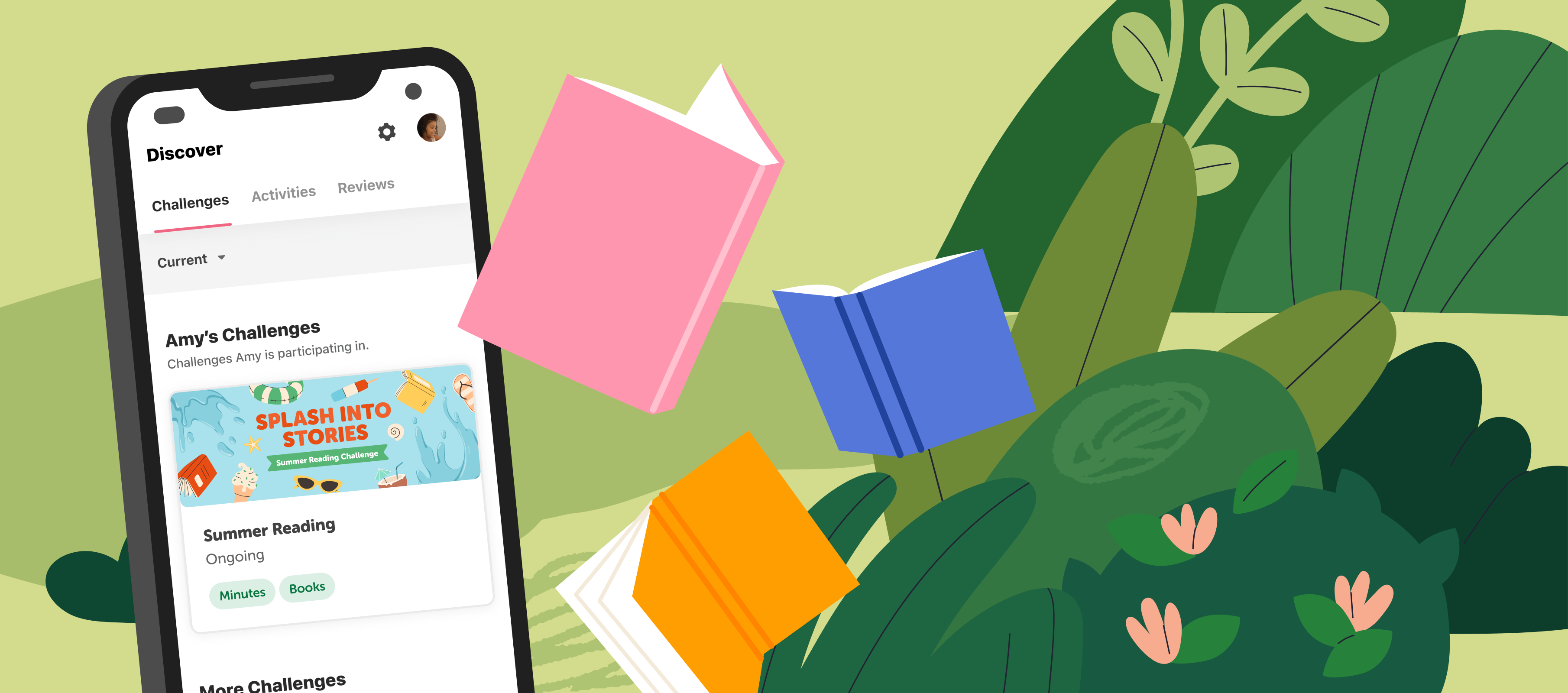
How Beanstack Powers Your Summer Reading Program
Beanstack is built specifically for summer reading programs at libraries, schools, and community organizations of every size.
For readers and families, Beanstack offers:
- Mobile app reading logs for books, minutes, or days
- Digital badges and milestone rewards
- Friendly leaderboards and reading competitions
- Book logging without quizzes or stress-based accountability
For administrators and educators, Beanstack provides:
- Real-time data dashboards showing participation and reading habits
- Community-wide challenge tools that connect libraries and schools
- Themed challenge templates and ready-made program materials
- A dedicated client-success team and extensive help desk resources
Frequently Asked Questions About Summer Reading Programs
What is a summer reading program?
A summer reading program is a structured initiative that encourages children to read during the summer months. Programs typically include reading goals, book recommendations, progress tracking, and incentives or rewards.
Why are summer reading programs important?
They prevent the summer slide, bridge the achievement gap, support social-emotional development, and help children build lifelong reading habits.
Who can run a summer reading program? Public libraries, school districts, and community organizations all run summer reading programs. Platforms like Beanstack make it easy to launch and manage challenges at any scale.
What is the best way to track summer reading?
Tracking by minutes in digital reading logs is generally the most equitable approach. It gives all readers, regardless of skill level, an equal opportunity to participate and provides useful data about actual time spent reading.
How do you get more kids to participate in summer reading? Strong staff promotion, easy registration, age-appropriate incentives, and giving children choice in what they read are all proven drivers of participation.
Make This Summer One for the Books
Summer reading programs protect the progress students have worked hard to build, bridge gaps in access, and plant the seeds of lifelong reading habits. With the right platform and a solid plan, your program can reach more readers, drive more engagement, and deliver results you can measure.
Ready to bring a powerful summer reading challenge to your library, school, or community? Schedule a demo today and see what Beanstack can do for your readers this summer.