July is Disability Pride Month, a time to celebrate disabled voices, stories, achievements, and advocacy. It also marks the anniversary of the Americans with Disabilities Act (ADA), which was signed into law on July 26, 1990. Built on decades of activism and advocacy, the ADA became a landmark step toward greater accessibility and inclusion in the United States.
For schools and libraries, Disability Pride Month is an opportunity to spark conversations, build empathy, and help readers discover stories that reflect a wide range of lived experiences. More than 70 million adults and 7.5 million children in the U.S. are living with a disability, making representation and accessibility an important part of creating welcoming reading communities for all.
Whether you’re creating displays, sharing resources, or launching a themed reading challenge, this month offers countless ways to celebrate inclusion through stories.
1. Share Stories That Expand Perspectives
One of the most meaningful ways to celebrate Disability Pride Month is by sharing stories that help readers see the world, and each other, a little differently. The right book can spark empathy, challenge assumptions, inspire important conversations, and help more readers feel recognized and represented on the page. In classrooms, libraries, and communities, stories have a unique way of bringing people together and reminding us that every experience and perspective matters.
Curated booklists can make it easier to discover titles that celebrate disability, challenge stereotypes, and highlight authentic lived experiences. Here are a few great places to start:
- Disability Pride Booklist from the Boston Public Library
- Disability Pride Month from the Children’s Book Council
- Disability Pride Month 2025 Booklist from the Brooklyn Public Library
- Celebrating Disability Pride Month With Books for All Ages
- Books To Read for Disability Pride Month
Recommended Reads by Age Group
To help readers connect, learn, and reflect, here are a few recommended titles that celebrate disability representation, challenge ableism, and showcase the various ways people experience the world.
Children
- The Secret Garden by Frances Hodgson Burnett: This classic children’s novel follows Mary Lennox and her cousin Colin as they discover a hidden garden that transforms both their lives.
- Wonder by R.J. Palacio: A heartfelt story about August Pullman, a 10-year-old with a craniofacial difference, navigating friendship, bullying, and school life.
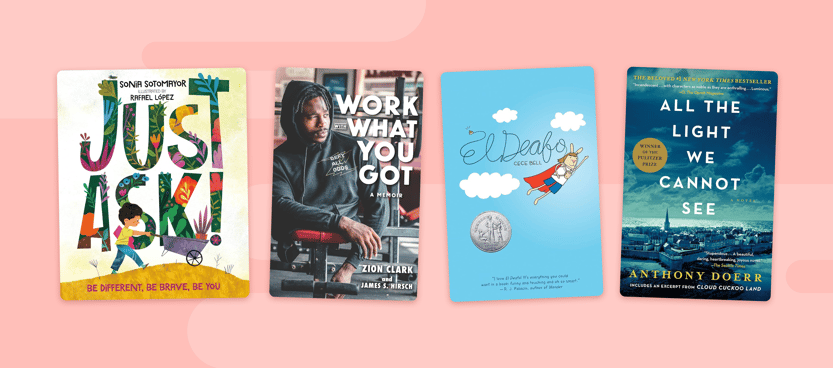
- Just Ask! Be Different, Be Brave, Be You by Sonia Sotomayor and Rafael López: A vibrant picture book that encourages children to ask questions, celebrate differences, and build community.
- Boy by Phil Cummings and Shane DeVries: A story about a young boy who lives in a silent world and couldn’t hear the battles, dragons, and fighting within the kingdom of which he lived with his parents.
Teen
- Just Don't Fall: A Hilariously True Story of Childhood, Cancer, Amputation, Romantic Yearning, Truth, and Olympic Greatness by Josh Sundquist: Paralympian Josh Sundquist shares a funny, honest memoir about childhood cancer, amputation, and resilience.
- El Deafo by Cece Bell: This New York Times Bestselling graphic novel is about Cece, a little girl who is deaf, and how she becomes a superhero with the support of her Phonic Ear, a hearing aid.
- Unbroken: 13 Stories Starring Disabled Teens by Marieke Nijkamp: A collection of fictional stories by disabled authors that move away from broken stereotypes and narratives about disabled teens.
- Insignificant Events in the Life of a Cactus by Dusti Bowling: A heartfelt story about Aven Green, a young girl born without arms, and how she befriends a classmate with his own disability, solves a mystery, and faces constant questions from others about what happened to her arms.
Young Adult
- Kids of Appetite by David Arnold: A New York Times Bestseller that’s funny and touching as it tells the story of Victor and Madeline as they struggle with dark circumstances.
- Wild and Crooked by Leah Thomas: A gripping story about Kalyn Spence, who’s hiding her true identity, and Gus Peake, known as the disabled kid for his cerebral palsy – two teens with an interconnected, lingering past inherited from their parents’ choices.
- Highly Suspicious and Unfairly Cute by Talia Hibbert: A story about an unlikely love between rival teens with very distinct personalities and traits – Bradley is a football player with OCD, and Celine is a conspiracy theory-obsessed social media influencer.
- Work with What You Got: A Memoir by Zion Clark and James S. Hirsch: In this memoir learn how Zion, born with a rare condition called caudal regression syndrome that left him without legs, turns to wrestling thanks to supportive foster parents and his wrestling coach.
Adult
- Against Technoableism: Rethinking Who Needs Improvement by Ashley Shew: A BookRiot’s 10 Best Disability Books of the Year, Shew’s manifesto challenges the way we think about disability and argues that disabled people are the true experts on what’s needed for technology and disability.
- All the Light We Cannot See by Anthony Doerr: Tells the story of Marie-Laure, a blind French woman, and Werner, a German orphan with talent and skills that lead him to Hitler Youth, as their lives interweave and the odds stack against doing what’s right and good.
- The Sound and the Fury by William Faulkner: First published in 1929, this novel highlights the disintegration of the Compson family, former Mississippian aristocrats while exploring themes of memory, family legacy, and social change.
2. Listen to Disabled Voices and Creators
Podcasts are a powerful way to hear firsthand accounts, explore disability culture, and learn from creators, advocates, athletes, and storytellers who share their perspectives in their own words.
Looking to learn on the go? Add these to your playlist:
- Everything You Know About Disability is Wrong: A podcast for and by the disability community that focuses on disabled leaders, content creators, and more while tackling stigma and assumptions with a twist.
- Disabled and Proud: Hosted by adaptive athlete Brooke Millhouse, this podcast creates space for disabled people to share challenges they face while being unabashedly themselves.
- Disability Matters with Joyce Bender: Weekly discussion about the ways people with disabilities can find career opportunities and how employers can show support.
- Major Pain: A dedicated space for sharing unfiltered chronic illness stories and disability interviews.
- Disability Visibility: Conversations centered around disability politics, culture, and media.
- The Shining Beautiful Series: Hosted by Mikelle, a non-verbal podcaster with cerebral palsy, this series explores everyday life with a disability and the empowering role technology can play in accessibility.
3. Make Reading More Accessible with Comics and Manga
Comics, manga, and graphic novels can help make reading more engaging and accessible for a wide range of readers. Visual storytelling offers another pathway into stories and can be especially impactful for readers who may not connect with traditional text-heavy formats.
With Comics Plus® readers can dive deep into thousands of titles for Disability Pride Month. Here are a few selections from our featured list, Amplify Disability Awareness:
Children
- My Special Needs Family by Claudia Harrington and Zoe Persico (ABDO)
- Skateboard Sonar by Eric Stevens and Gerardo Sandoval (Capstone)
- Nature's Friend: The Gwen Frostic Story by Lindsey McDivitt and Eileen Ryan Ewen (Cherry Lake)
- Helping Sophia by Anastasia Suen and Jeff Ebbeler (ABDO)
- Dreams Take Flight: The Story of Deaf Pilot Nellie Zabel Willhite by Brittany Richman and Alisha Monnin (Cherry Lake)
- The Fantastic Freewheeler vs. the Mall of Doom by Molly Felder and Yury Guzman (Capstone)
Teen
- Brother: A Story of Autism by Anthony Zuiker, Bridget Hudgens, Carlton Hudgens, and Nam Kim (Zuiker Press)
- Sensory: Life on the Spectrum: An Autistic Comics Anthology by Rebecca Ollerton (Andrews McMeel)
- Sincerely, Harriet by Sarah Winifred Searle (Lerner)
- In/Spectre 1 by Chashiba Katase and Kyo Shirodaira (Kodansha USA)
Young Adult
- Lavender Clouds: Comics about Neurodivergence and Mental Health by Bez Ollerton (Andrews McMeel)
- Ripple Effects by Jordan Hart, Bruno Chiroleu, and Oceano Ransford (Fanbase Press)
- The Thud by Mikaël Ross (Fantagraphics)
- A Silent Voice 1 by Yoshitoki Oima (Kodansha USA)
Adult
- Barking by Lucy Sullivan (Avery Hill)
- Rock Steady: Brilliant Advice From My Bipolar Life by Ellen Forney (Fantagraphics)
- Psychotic by Jacques Mathis and Sylvain Dorange (Humanoids Studios SA)
- The Vertical Sea by Brian Freschi and Ilaria Urbinati (Dark Horse)
4. Create Conversation Around Inclusion
Disability Pride Month is a great opportunity to bring your community together through shared reading experiences and thoughtful discussions. Simple activities, such as creating a themed book display featuring disabled authors and characters, or encouraging readers to share favorite quotes and takeaways, can help spark curiosity and engagement throughout the month.
One especially meaningful way to deepen those connections is to use reflection prompts or discussion questions to encourage conversation about the stories readers are exploring. These conversations can help readers think more critically, connect with new perspectives, and engage more personally with what they’re reading.
Try questions like:
- What did this story help you understand in a new way?
- Which character or experience stood out to you most?
- How did this story challenge assumptions or stereotypes?
- What makes stories with diverse perspectives important?
- What’s one thing you’ll continue thinking about after reading?
Small moments like these can help create a more thoughtful, welcoming, and connected reading culture throughout your school or library community.
5. Lead a Disability Pride Month Reading Challenge
Creating a reading challenge is a powerful way to celebrate Disability Pride Month while bringing your community together through stories, reflection, and discovery. A themed challenge can encourage readers to explore new perspectives, celebrate disabled voices, and connect with books that help more people feel seen, represented, and included.
With Beanstack, it’s easy to create a Disability Pride Month reading challenge. Add curated reading lists, custom badges, and community participation features to keep readers engaged, inspired, and excited to read all month long.
Ready to create a more inclusive reading culture? Get started today.